
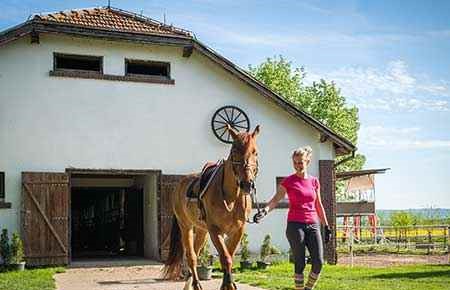
Horse Husbandry / Equine Science and Management Majors and Careers

Horse Husbandry/Equine Science and Management


Horse Husbandry/Equine Science Management/Equine Studies Majors


Horse Husbandry/Equine Science and Management/Equestrian Studies

There are two majors and degree programs in the field of Equine Studies 

  1. Equestrian/Equine Studies Major

A program that focuses on the horse, horsemanship, and related subjects and prepares individuals to care for horses and horse equipment; ride and drive horses for leisure, sport, show, and professional purposes; and manage the training of horses and riders.

Equine Science and Management/Equestrian Studies majors and degree programs likely include instruction in horse breeding, nutrition, health, and safety; history of the horse and horsemanship; horse development and training; riding and equestrian technique; stable, paddock, and track management; and equipment maintenance and repair.

  1. Horse Husbandry/Equine Science and Management Major

A program that prepares individuals to manage the selection, breeding, care, and maintenance of work, athletic, and show horses; and to manage horse farms, stables, tracks and related equipment and operations.

Includes instruction in applicable principles of animal science, care, and health; stable and track management; design and operation of facilities and equipment; and related issues such as regulations, business management; and logistics.


🐎 Introduction to Equine Science & Horse Husbandry

Equine Science (also called Horse Husbandry or Equine Studies) is the study of horses—their biology, care, management, and use in sport, work, or therapy. This field combines animal science, biology, management, and business, preparing students for careers in horse care, training, breeding, and equine-related industries.


🎓 What You Study in Equine Science Majors

Equine Science programs typically cover:

  1. Horse Biology & Physiology:

    • Anatomy, nutrition, reproduction, and exercise physiology.

    • Understanding health, growth, and performance of horses.

  2. Equine Management & Husbandry:

    • Daily care, stable management, grooming, feeding, and facility management.

    • Pasture management, tack, and equipment knowledge.

  3. Training & Behavior:

    • Equine behavior, handling, and basic training methods.

    • Horse-rider communication and safety.

  4. Business & Industry Knowledge:

    • Farm or stable management, finance, marketing, and equine law.

    • Event management for shows, competitions, or equine tourism.

  5. Health & Veterinary Basics:

    • Disease prevention, first aid, common injuries, and veterinary care.

    • Collaboration with veterinarians for herd or performance management.

  6. Optional: Technology & Research:

    • AI and data for breeding, performance tracking, or nutrition optimization.

    • Precision equine management tools (GPS tracking, health monitors).


🌟 Career Paths in Equine Science

  1. Equine Manager / Stable Manager:

    • Oversee horse facilities, staff, and day-to-day care.

    • Manage finances, breeding programs, and events.

  2. Trainer / Riding Instructor:

    • Train horses for sport, work, or therapy programs.

    • Teach riders and ensure proper handling techniques.

  3. Breeding Specialist / Reproduction Technician:

    • Manage breeding programs, track genetics, and optimize foal production.

    • Often work with studs, broodmares, and AI-assisted reproduction.

  4. Equine Nutritionist / Health Specialist:

    • Design feeding programs for optimal performance or recovery.

    • Advise on supplements, disease prevention, and weight management.

  5. Equine Therapist / Rehabilitation Specialist:

    • Work in veterinary clinics, rehab centers, or therapy programs.

    • Combine knowledge of anatomy, injury recovery, and conditioning.

  6. Researcher / Consultant:

    • Work in equine science research, genetics, or performance analytics.

    • Help improve breeding, nutrition, training, or health programs.

  7. Industry Roles / Business:

    • Equine event manager, horse farm owner, equine tourism operator, or sales/marketing for equine products.


💡 Key Points About Equine Careers

  • Hands-on experience is essential: Internships, volunteer work, and riding experience matter more than classroom grades alone.

  • Specialized knowledge pays off: Breeding, performance, or therapy specialization can lead to higher-paying roles.

  • Pay varies widely:

    • Entry-level stable assistant: $25k–$40k

    • Trainers, nutritionists, and managers: $45k–$80k+

    • Specialized consultants or farm owners: $100k+ depending on scale and reputation

  • AI & tech are emerging: Tools for monitoring horse health, nutrition, and performance are making equine management more data-driven.


🎓 Notable U.S. Colleges with Equine Science / Horse Husbandry Programs

  • Colorado State University – Equine Science and Management, strong research program

  • University of Kentucky – Equine Science, breeding, and performance research

  • Auburn University – Equine Science and Management

  • Michigan State University – Equine Science, focusing on management and breeding

  • Purdue University – Equine Science and industry-focused programs

  • Virginia Tech – Equine Science and Management, including riding programs


🐎 Equine Science & Horse Husbandry Career Roadmap — U.S.

This roadmap focuses on high-paying, AI-resistant careers in the horse industry, integrating science, management, and emerging technology.


1️⃣ High School (Grades 9–12)

Core Academic Foundation:

  • Science: Biology, Chemistry, Animal Science

  • Math: Algebra → Pre-Calculus, basic Statistics (for performance and breeding data)

  • Optional: Computer Science / Coding basics (Python, Excel, or R for monitoring systems)

Extracurriculars / Electives:

  • Riding, horse clubs, or FFA/4-H with livestock/horses

  • Robotics, drone clubs, or data science (for future AI applications in horse management)

Hands-On Experience:

  • Volunteer or work at stables, riding schools, or equine rehab centers

  • Participate in shows, competitions, or therapeutic riding programs

Skills to Develop:

  • Observation and problem-solving

  • Horse handling, safety, and basic care

  • Record-keeping and data collection


2️⃣ College (Undergraduate, 4 Years)

Recommended Majors:

  • Equine Science / Horse Husbandry / Equine Studies

  • Animal Science with equine focus

  • Related options: Agricultural Science, Sustainable Agriculture, or Veterinary Technology

Minors / Skills:

  • Tech & AI Skills: Data analysis, GPS tracking, wearable health monitors for horses

  • Business Skills: Stable management, event planning, equine law, marketing

Hands-On College Experience:

  • Internships at commercial stables, breeding farms, or equine therapy centers

  • Fieldwork: feeding, grooming, exercise, and riding

  • Lab work: reproduction, nutrition, and health monitoring

  • Professional groups: Intercollegiate Horse Show Association (IHSA), American Association of Equine Practitioners (AAEP)


3️⃣ Early Career (Years 1–5 Post-College)

Target Roles:

  • Stable Assistant / Barn Manager

  • Riding Instructor / Assistant Trainer

  • Equine Lab Technician or Breeding Technician

  • Equine Nutrition Assistant

Focus Areas:

  • Apply AI tools for health monitoring, nutrition tracking, and breeding programs

  • Gain hands-on experience with training, riding, and daily horse care

  • Learn business and operations basics for stables or events

Pay Potential:

  • Entry-level: $25k–$40k

  • Early tech-assisted roles: $35k–$50k


4️⃣ Mid-Career (Years 5–15)

Advanced Roles:

  • Stable Manager / Head Trainer / Lead Breeding Specialist

  • Equine Nutritionist / Performance Analyst

  • Equine Rehabilitation Specialist

  • Equine Event Manager / Farm Operations Manager

Skills to Add:

  • Advanced AI applications: health monitoring sensors, breeding analytics, performance tracking

  • Leadership, team management, and client relations

  • Business and marketing for high-value horse operations or events

Pay Potential:

  • $45k–$80k+ depending on specialization and scale


5️⃣ Long-Term / Peak Career (15+ Years)

Top Positions:

  • Senior Trainer / Head Breeding Specialist

  • Farm, Ranch, or Stable Owner

  • Equine Consultant / Performance Analyst

  • Director of Equine Therapy Programs or Research

  • Equine Scientist in genetics, breeding, or performance analytics

AI Integration:

  • Use AI for breeding optimization, performance tracking, and injury prevention

  • Manage multiple facilities or herds using data-driven tools

  • Make strategic decisions combining human expertise and technology

Pay Potential:

  • $80k–$150k+, higher for private farm owners, elite trainers, or top consultants


6️⃣ Key Takeaways

  1. Human expertise + technology = AI-resistant careers in horse care and management.

  2. Hands-on experience is critical: riding, stable work, breeding, and rehab work matter more than grades alone.

  3. Tech and AI are emerging in equine care, from wearable sensors to predictive breeding and health analytics.

  4. Specialization pays off: breeding, therapy, performance analysis, or high-end training careers earn the most.

  5. Top U.S. locations: Kentucky, Florida, Texas, Pennsylvania, California, and Virginia — all major equine hubs.


This roadmap integrates science, hands-on care, business, and AI readiness, showing a clear path from high school → college → early career → mid-career → top roles, including pay ranges and tech applications.


What can you do with a major/degree in Horse Husbandry/Equine Science and Management/Equestrian Studies?

A major and degree in this field can lead to many horse-related career opportunities such as transportation, basic horse care, health care, manure removal, guest (dude) ranches, equine sales, horse shows, rodeos, racing, product sales, event management, veterinary care, breeding, and rescue.

Trade Associations and Professional Organizations in Horse Husbandry/Equine Science and Management/Equestrian Studies:

Professional associations are groups of professionals dedicated to topics in specific fields. Professional associations provide a wealth of online resources, some of which are geared specifically towards students. These organizations typically also host conferences and events, providing great opportunities for learning and networking across your field of interest.

Publications/Magazines in Horse Husbandry/Equine Science and Management/Equestrian Studies: