

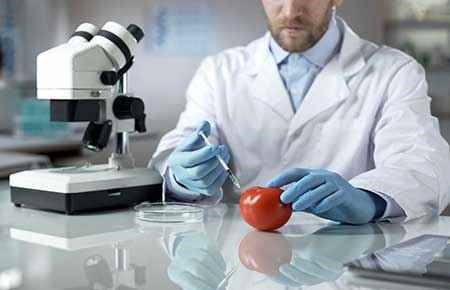
Food Science Majors
Food Science prepares people to focus on and research the application of biological, chemical, and physical principles to the study of converting raw agricultural products into processed forms suitable for direct human consumption, and the storage of such products.
Food Science majors and degree programs generally include instruction in applicable aspects of the agricultural sciences, human physiology and nutrition, food chemistry, agricultural products processing, food additives, food preparation and packaging, food storage and shipment, and related aspects of human health and safety including toxicology and pathology.
🍔 Introduction to Food Science Majors & Careers (U.S.)
Food Science is the study of the science behind food — how it’s made, processed, preserved, packaged, tested, and delivered safely from farm to table. It blends biology, chemistry, microbiology, engineering, nutrition, and technology to create safe, nutritious, and appealing food products.
People in this field work for food companies (product development, quality control), government agencies (safety & inspection), research labs (new processes & ingredients), and related industries (packaging, marketing).
Typical work settings include food processing plants, laboratories, sensory evaluation labs, government inspection facilities, and corporate research & development.
🎓 What You Study in a Food Science Major
A Food Science degree usually includes courses in:
-
Food chemistry & food biology — understanding food components
-
Microbiology — food safety and spoilage prevention
-
Food processing & engineering — how food is manufactured and packaged
-
Quality assurance & safety systems
-
Product development & sensory evaluation (how foods taste and perform)
-
Nutrition & health aspects of food
-
Regulatory affairs / food law
These subjects prepare you for roles in both scientific and technical areas of the food industry.
🧑🔬 Food Science Careers You Can Pursue
Here are common job paths for Food Science graduates:
Product Development Scientist
Create and improve food products, recipes, and formulations.
Quality Assurance / Quality Control Specialist
Ensure food safety, compliance with standards, and consistent product quality.
Food Microbiologist
Study microorganisms in food to improve safety and shelf life.
Food Chemist
Analyze chemical properties of foods and ingredients.
Food Processing or Packaging Technologist
Design and troubleshoot processing systems and packaging for safety and efficiency.
Sensory Scientist
Study how consumers perceive food taste, texture, and appearance.
Regulatory / Food Safety Specialist
Work with government agencies or companies to ensure compliance with food laws.
Research & Development (R&D) Scientist
Develop new processing methods, ingredients, or technologies.
Food science careers can also lead to related roles in sales, consulting, supply chain, nutrition, and food policy.
💰 Job Outlook & Salary
-
Food scientists and technologists have a growing job market — expected to grow around 8%, faster than average.
-
Median pay for agricultural and food scientists is about $78,770 per year (U.S. Bureau of Labor Statistics).
-
Salaries vary by role and location. Industry reports show median food science-related compensation around $110,000, with entry-level roles often in the high $70,000s.
📍 Major Food Science & Related Resources with Links
📘 Professional Associations
These give you access to careers info, networking, conferences, journals, and student memberships:
• Institute of Food Technologists (IFT) — A major U.S. professional association for food science and technology.
🔗 https://www.ift.org/
• Phi Tau Sigma — International honor society for food science and technology.
🔗 https://phitausigma.org/
• Cereals & Grains Association (AACC) — Focuses on cereals/grains in food science and related research.
🔗 https://www.cerealsgrains.org/
🛠 Educational & Career Resources
• USDA National Agricultural Library – Food & Nutrition Professional Development
Includes career toolkits, accredited program links, and USDA job openings.
🔗 https://www.nal.usda.gov/human-nutrition-and-food-safety/professional-career-development-nutrition
• U.S. Food & Drug Administration – Food Science Careers
Interviews with professionals and insights into careers at FDA.
🔗 https://www.fda.gov/food/science-and-our-food-supply/careers-food-science
🎓 University and Program Pages with Career Info
These pages give examples of majors and careers, which can help with planning:
• Penn State Food Science Careers
Product development, QA, R&D, regulatory, marketing.
🔗 https://foodscience.psu.edu/undergraduate/resources/careers
• UMass Amherst Food Science Overview
Detailed tasks and work environments for food scientists.
🔗 https://www.umass.edu/natural-sciences/advising/careers/career-paths/food-science-now-what
• Purdue Food Science
Examples of career options and applications of major.
🔗 https://ag.purdue.edu/department/foodsci/majors-food-science.html
• University of Georgia Food Science Careers
Lists career paths including microbiology, chemistry, product and packaging roles.
🔗 https://foodscience.caes.uga.edu/undergraduate/careers.html
• Texas A&M Food Science & Technology
Focus on safety, processing, and engineering roles.
🔗 https://careercenter.tamu.edu/current-students/explore-majors-and-careers/majors/food-science-technology
🧠 Quick Summary
-
Food Science combines biology, chemistry, engineering, and technology to improve food safety, quality, nutrition, and processing.
-
Careers span product development, quality assurance, microbiology, engineering, research, and regulatory science.
-
The job market is growing, with competitive salaries and opportunities in industry, government, and research.
-
Professional organizations like IFT provide networking, mentorship, and student resources.
🍴 Food Science Career Roadmap — United States
This roadmap highlights high-paying, AI-resistant careers in food safety, processing, product development, and research, integrating science, technology, and business skills.
1️⃣ High School (Grades 9–12)
Core Academics:
-
Science: Biology, Chemistry, Physics, Environmental Science
-
Math: Algebra → Pre-Calculus, Statistics
-
Optional: Computer Science / Coding basics (Python, Excel, or R for lab data)
Extracurriculars / Electives:
-
Home economics, cooking, or nutrition clubs
-
FFA/4-H with food science projects or livestock processing
-
STEM clubs focused on chemistry, microbiology, or biotechnology
Hands-On Experience:
-
Volunteer at labs, food banks, or local farms
-
Participate in science fairs or food competitions
Skills to Develop:
-
Laboratory skills (measuring, observing, recording)
-
Food safety and hygiene awareness
-
Analytical thinking and problem-solving
2️⃣ College (Undergraduate, 4 Years)
Recommended Majors:
-
Food Science / Food Science & Technology – broad foundation in chemistry, microbiology, and food processing
-
Nutrition & Food Science – overlaps with health and dietetics
-
Food Engineering – focus on processing, packaging, and production technology
-
Related options: Agricultural Science, Biotechnology, Microbiology
Minors / Skills:
-
Tech & AI Skills: Data analytics, lab automation, predictive modeling for shelf-life or processing efficiency
-
Business Skills: Product marketing, food regulations, and supply chain management
Hands-On College Experience:
-
Internships at food manufacturing plants, government labs, or research facilities
-
Laboratory research: microbiology, chemistry, or product testing
-
Field trips to processing facilities and quality assurance labs
-
Professional groups: Institute of Food Technologists (IFT), Phi Tau Sigma
3️⃣ Early Career (Years 1–5 Post-College)
Target Roles:
-
Quality Assurance / Quality Control Specialist
-
Product Development Assistant
-
Food Microbiologist / Chemist
-
Lab Technician
Focus Areas:
-
Apply AI, sensors, and predictive analytics for quality control and process optimization
-
Gain experience with product development and testing procedures
-
Learn food safety regulations (FDA, USDA)
Pay Potential:
-
Entry-level: $45k–$60k
-
Early tech-assisted roles: $55k–$70k
4️⃣ Mid-Career (Years 5–15)
Advanced Roles:
-
Senior Food Scientist / R&D Scientist
-
Product Development Manager
-
Food Safety Specialist / Regulatory Affairs Manager
-
Food Process Engineer / Packaging Technologist
Skills to Add:
-
Advanced AI and automation applications in production or quality control
-
Project management and leadership
-
Regulatory compliance and risk assessment
-
Product innovation and market analysis
Pay Potential:
-
$70k–$120k+, depending on specialization and company
5️⃣ Long-Term / Peak Career (15+ Years)
Top Positions:
-
Director of Food Science / R&D Director
-
Chief Food Safety Officer / Regulatory Director
-
Senior Product Development Scientist
-
Entrepreneur / Food Product Owner
-
Research Scientist in food biotechnology or process innovation
AI Integration:
-
Use AI and automation for quality prediction, shelf-life modeling, and process efficiency
-
Lead multi-site production, regulatory compliance, or large-scale R&D projects
-
Drive innovation in sustainable and healthy food products
Pay Potential:
-
$100k–$200k+, higher for senior roles, owners, or large-scale consultants
6️⃣ Key Takeaways
-
Human expertise + technology = AI-resistant career in food science.
-
Hands-on experience is critical: Labs, internships, and product testing build essential skills.
-
Tech and AI are growing: Predictive modeling, sensors, and lab automation improve efficiency and safety.
-
Specialization boosts pay: Product development, food safety, and R&D leadership roles are most lucrative.
-
Top U.S. locations: Midwest, California, New York, Texas, and Southeast — major food manufacturing hubs.
🔗 Resources to Learn More
Professional Associations:
-
Institute of Food Technologists (IFT) – Networking, student memberships, events, research
-
Phi Tau Sigma – Honor society for food science students and professionals
-
USDA Food & Nutrition Careers – Career resources and internships
-
FDA Food Science Careers – Food regulatory and safety roles
University Career Pages:
Additional Reading:
-
Cereals & Grains Association – Grain and food processing research
What can you do with a major/degree in Food Science?
Completing this major/degree program will likely lead to work for a non-profit organization, a conglomeration of farmers, television networks, and/or government agencies.
Trade Associations and Professional Organizations in Food Science:
Professional associations are groups of professionals dedicated to topics in specific fields. Professional associations provide a wealth of online resources, some of which are geared specifically towards students. These organizations typically also host conferences and events, providing great opportunities for learning and networking across your field of interest.
- International Association for Food Protection
- American Meat Association
- Organic Trade Association
- Food Processing Suppliers Association
Publications/Magazines in Food Science: